




Soil Insights
Seasonal Primers
What Alberta Corn Growers Are Actually Talking About in 2026
Corn acres in Alberta are exploding — but 2026 still comes with major decisions around CHU, irrigation, fertility, silage economics, and feedlot demand. Here's what growers across Alberta are actually talking about this season.
Table of Contents
- Water — and for once, some good news
- CHU and hybrid selection — still the make-or-break decision
- Soil temperature and planting decisions
- Fertilizer — less of a crisis here than elsewhere, but still real
- The feedlot demand story — and why it's bigger than corn
- Silage corn vs. barley silage — the conversation that won't quit
- Grazing corn in the Peace and central Alberta
- Other prairie corn concerns to watch
- The bottom line for Alberta
 Water — and for once, some good news
Table of Contents
- Water — and for once, some good news
- CHU and hybrid selection — still the make-or-break decision
- Soil temperature and planting decisions
- Fertilizer — less of a crisis here than elsewhere, but still real
- The feedlot demand story — and why it's bigger than corn
- Silage corn vs. barley silage — the conversation that won't quit
- Grazing corn in the Peace and central Alberta
- Other prairie corn concerns to watch
- The bottom line for Alberta
Five years ago, most Alberta growers still treated corn like a niche crop.
In 2026, that conversation is over.
Corn acres across Alberta have exploded — driven by feedlot demand, expanding dairy operations, stronger hybrid genetics, and a growing realization that, under the right conditions, corn can outperform almost anything else on the farm.
But this spring isn't just about excitement. It's about decisions.
Water allocations are back up after years of drought pressure. Fertilizer volatility is forcing growers to rethink "insurance" rates. Feedlots are aggressively looking for local supply.
And growers across southern Alberta, central Alberta, and the Peace Country are all asking slightly different versions of the same question:
Does corn still make sense here — and if it does, how do we make it pencil?
If you've spent any time lately at a Lethbridge Ag Expo, a Grey Wooded Forage Association meeting in Lacombe, or coffee row conversations across feedlot alley, you've probably noticed the shift.
Corn is no longer an experimental crop in Alberta. It's becoming a serious part of the conversation.
That said, 2026 is not a slam-dunk year for anybody.
Here's what Alberta corn growers are actually wrestling with this season — region by region.
Water — and for once, some good news
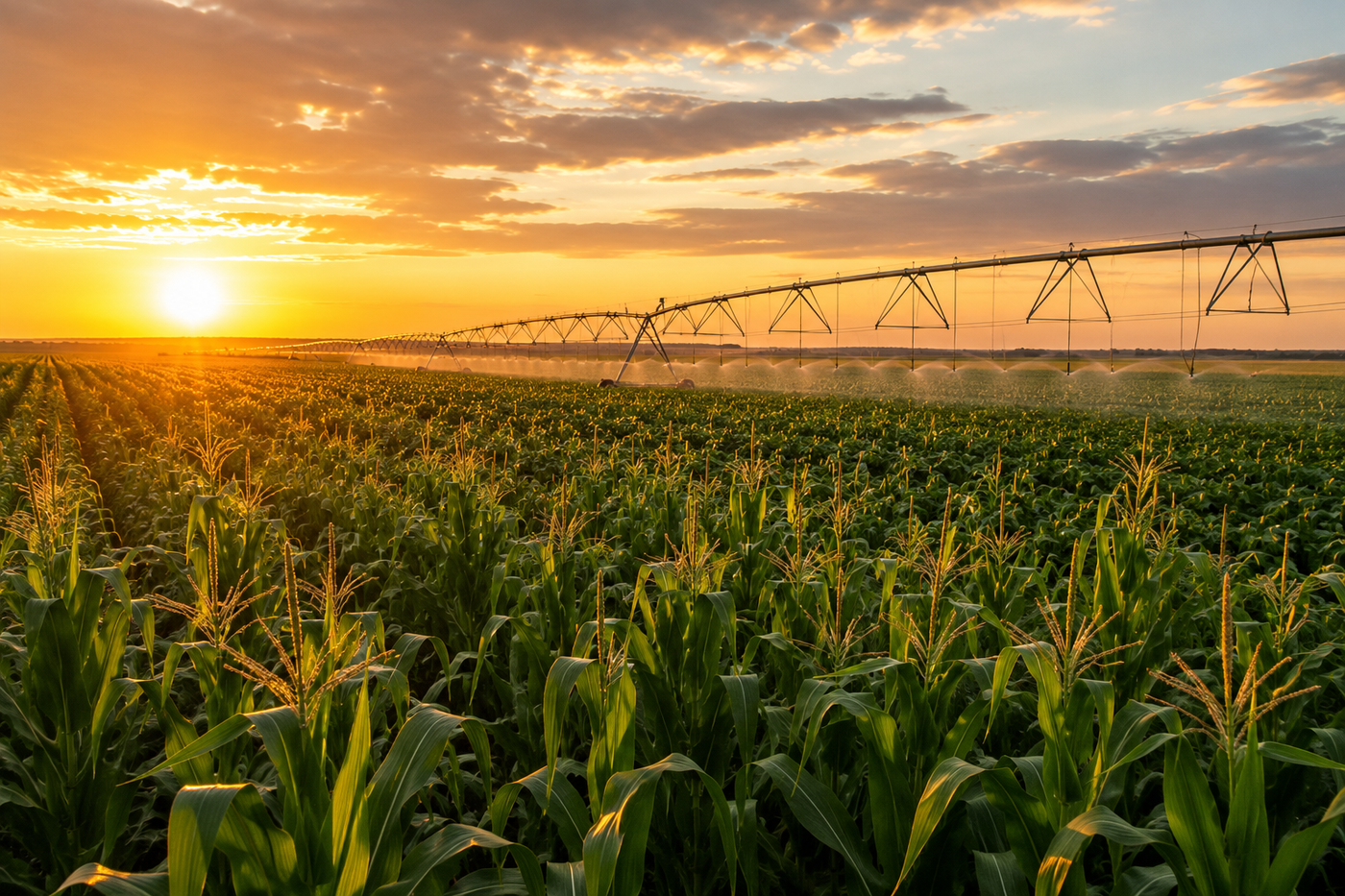
Going into 2026, the Alberta water story has flipped. After multiple drought years that forced irrigation district cutbacks — the St. Mary River Irrigation District (SMRID) was knocked from its standard 14 inches per acre down to as low as 9 inches in 2024 — the latest provincial Water Supply Outlook is pointing to normal to above-normal river flows across the Milk, Oldman, Bow, Red Deer and North Saskatchewan basins.
The Oldman Reservoir is sitting at over 80% full this spring. SMRID has confirmed it's back to a 14-inch allocation. Bow River Irrigation District general manager Richard Phillips called it "a promising start to the year, but rain always makes all the difference."
For corn growers in southern Alberta, this is the difference between can I even commit acres to corn and what hybrid am I planting. Corn is one of the highest water-demand crops you can grow, and the last two years had a lot of irrigated growers backing off it for safer cereal options.
With 2026 looking better, several of the southern Alberta pedigree growers interviewed by the Alberta Seed Guide said the same thing: if they were farming irrigated land this year, they'd be planting corn, because it's still one of the most profitable options on a conventional irrigation operation — whether you silage it off or store the grain.
A caution that came up in those same interviews and in the irrigation district AGMs: don't bank on a repeat of 2024–25 rainfall. If 2026 turns out to be a normal-consumption year without those bonus May-June rains, reservoir levels will be lower again going into 2027. Plan accordingly.
CHU and hybrid selection — still the make-or-break decision
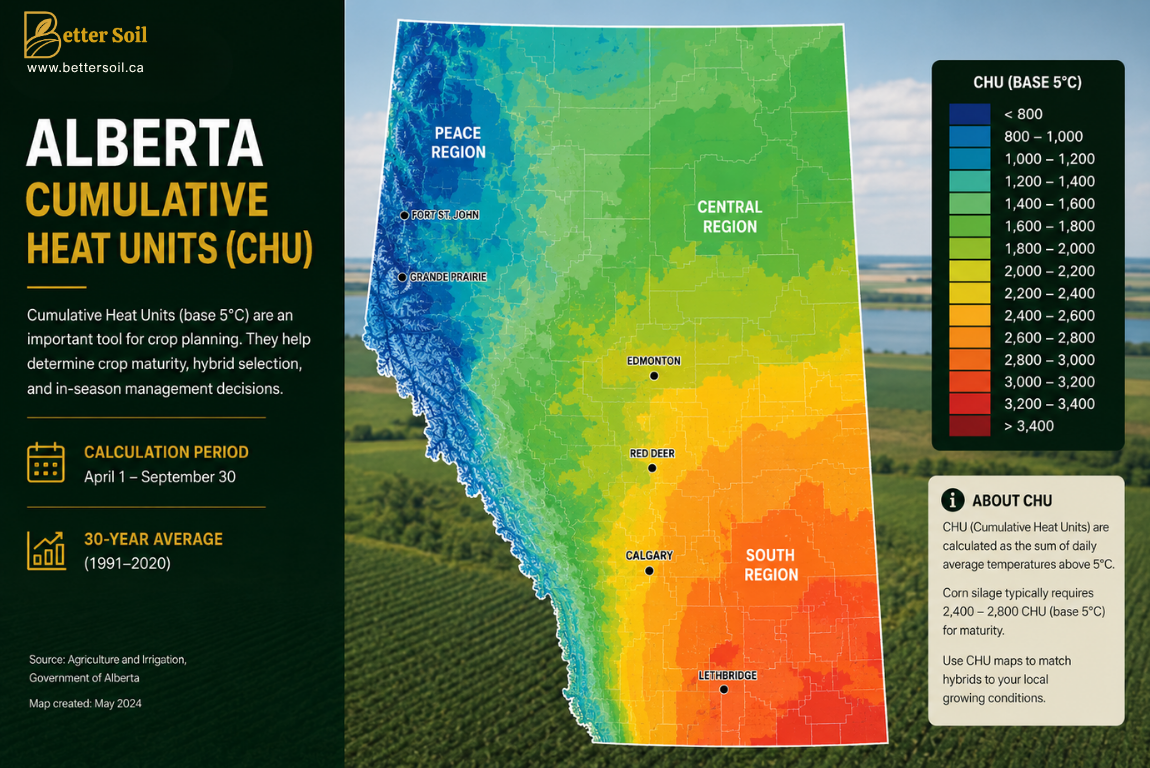
Hybrid selection is arguably the single most important decision Alberta corn growers make, and it varies enormously by region:
- Southern Alberta (Lethbridge, Taber, Bow Island): roughly 2,300–2,500 CHU. Real grain corn country, with Alberta Corn Committee trial averages of 148+ bushels at Bow Island and individual hybrids hitting 160+. TFS Expanse is reporting 250 bu/ac in strong years on irrigation.
- Central Alberta (Lacombe, Red Deer, Ponoka, Mountain View, Wetaskiwin): around 1,750–1,800 CHU. This is silage and dairy country, where about half of Alberta dairy farmers have tried or switched to corn silage, often because they got tired of disease and lodging issues with barley silage.
- Peace Country (Fairview area): the bottom end of where corn fits at all, mostly for late-fall winter grazing. Pioneer hybrids like the 2,100 CHU P7443R have shown 4+ tons DM/acre forage yield in PCBFA trials, beating barley.
The good news for everybody: corn breeders have been steadily chipping away at the heat unit requirement. There was a time when grain corn needed 3,000 CHU to mature. We've now got varieties down around 2,125 CHU, which is what makes grain corn feasible most years in southern Alberta and pushes the silage frontier further north.
The rule of thumb most agronomists are using: for silage, pick a hybrid with about 150 more CHU than your area's average rating; for grazing corn (where you intentionally want *less* grain accumulation to avoid rumen acidosis in pregnant cows), overshoot your CHU by as much as 400 so the plant can't fill grain in time.
Soil temperature and planting decisions
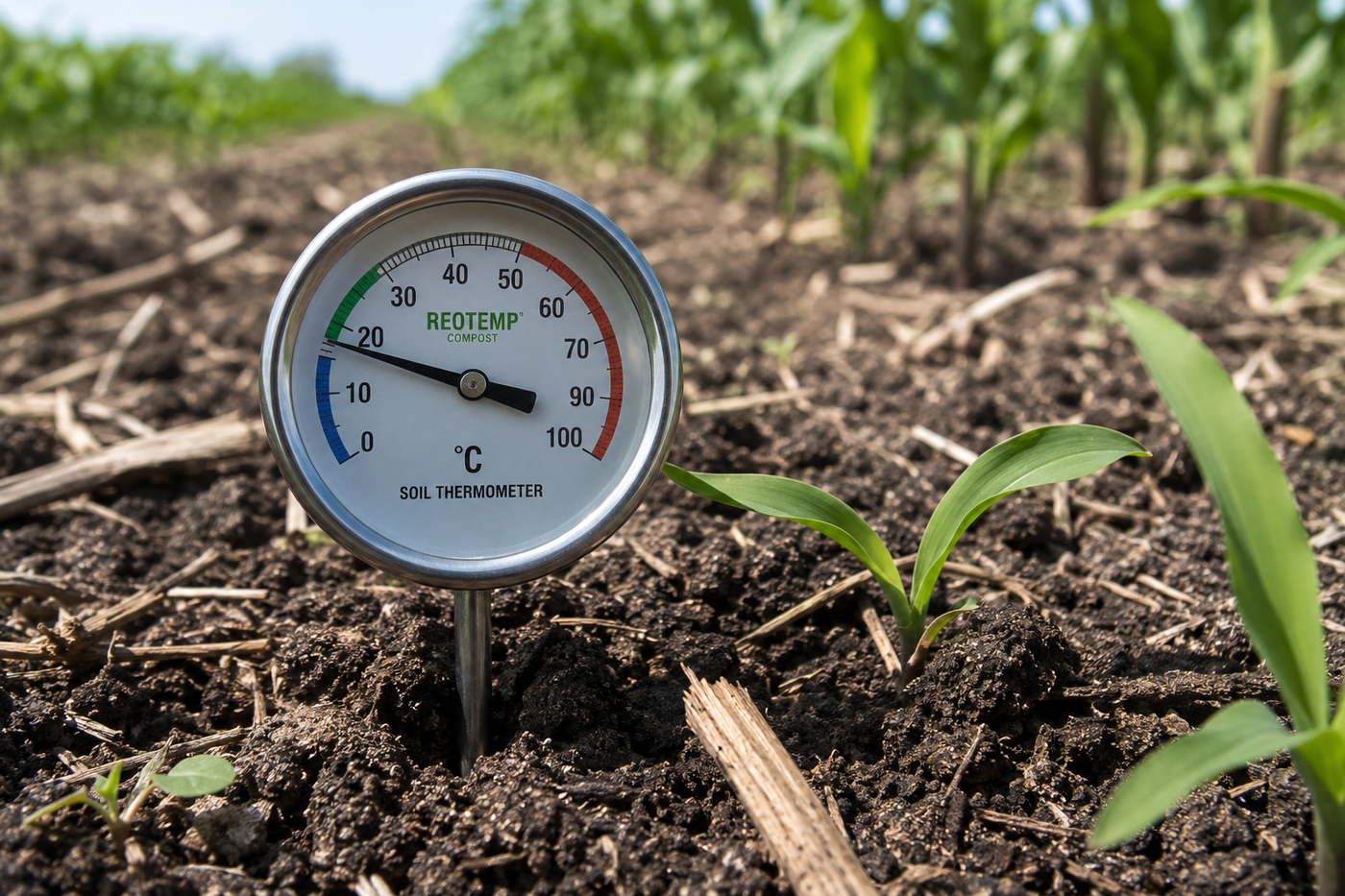
Corn is unforgiving on cold soil. Doug Moisey from Pioneer has put the number at roughly 10°C at seed depth as the minimum, with about 20°C being optimal. That's a meaningfully different conversation than what Ontario or U.S. Midwest growers are having.
In southern Alberta, it usually means waiting until early to mid-May depending on the year. In central Alberta, even longer. Mudding it in to chase a calendar date almost never pays — Wheat Pete Johnson made the same point on a recent RealAg Radio episode, talking about cold rains at 4°C and how planting under less-than-ideal conditions to get in early consistently costs growers in June, July, and August.
Fertilizer — less of a crisis here than elsewhere, but still real
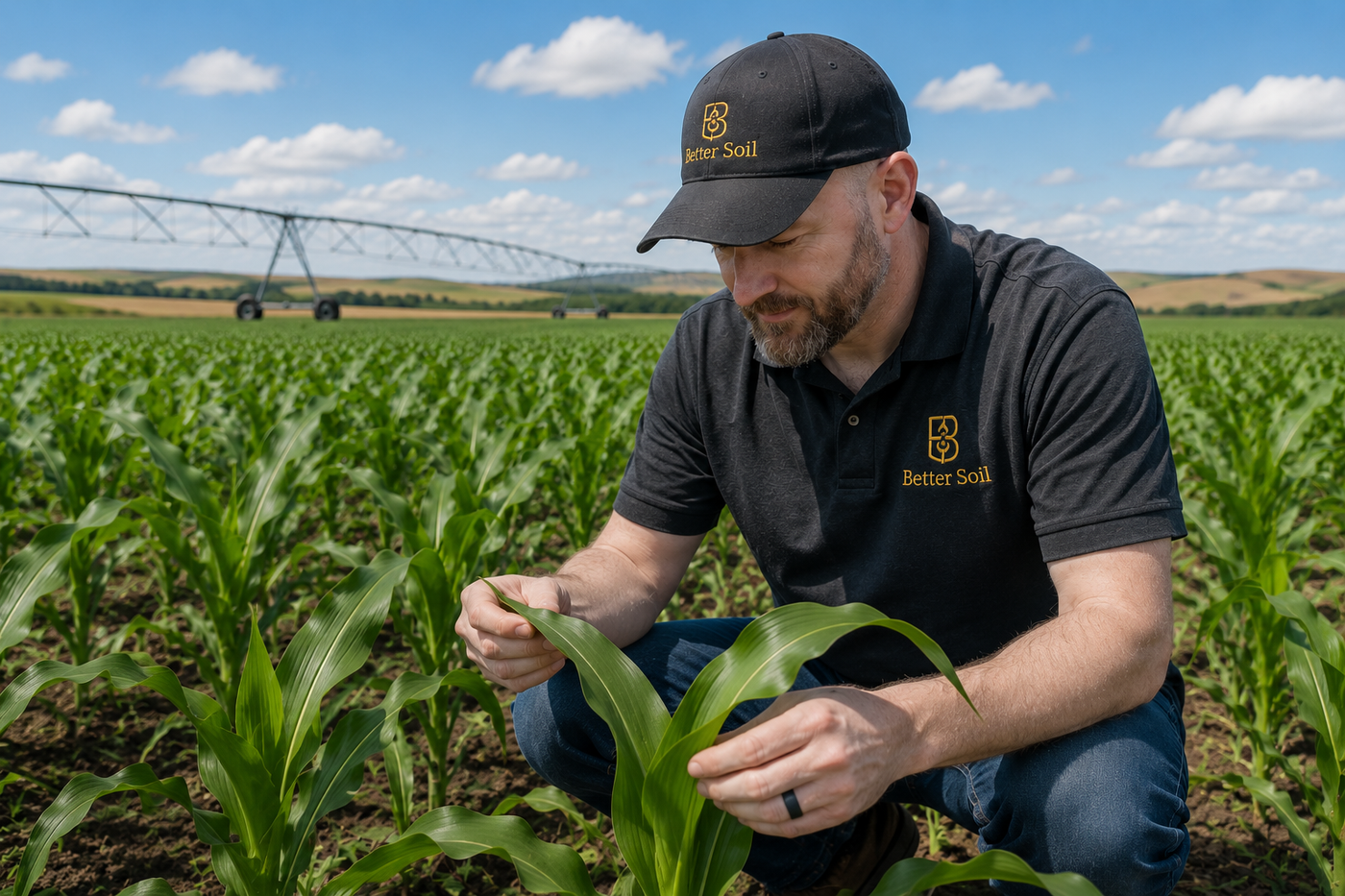
The big national story this spring is the Iran/Strait of Hormuz disruption that drove urea up 40%+ and has Ontario growers wondering if they'll physically get product in time for sidedress. Grain Farmers of Ontario has been raising the alarm publicly.
Alberta growers are feeling that, but not as acutely. A few reasons:
- A lot of Alberta nitrogen comes from natural gas-rich domestic production rather than overseas imports
- Many irrigated growers had inputs locked in earlier
- Alberta has more rotation flexibility — if corn doesn't pencil, barley does. Barley is up sharply across the prairies for 2026 (Saskatchewan +7.9%, Alberta +5.2%) for exactly this reason.
That said, fertilizer dollars are still tight enough this year to make every pound count.
The same advice extension folks across North America are giving applies here: trim your "insurance" nitrogen if you've been pushing high rates, consider a stabilizer or nitrification inhibitor, and split applications between planting and in-season where you can.
On irrigated corn, fertigation through the pivot is one of the most efficient ways to match N delivery to actual crop demand.
There's also a growing conversation among Alberta corn growers about going beyond the bag — using in-season tools like SAP analysis and Brix testing to measure what the plant is actually short of, and then delivering targeted foliar nutrition (including some interesting new nano-particle technology coming out of Western Canada) to fill the gap.
That's a big enough topic to deserve its own post, so we'll dig into it in detail in the next blog. Stay tuned.
The feedlot demand story — and why it's bigger than corn
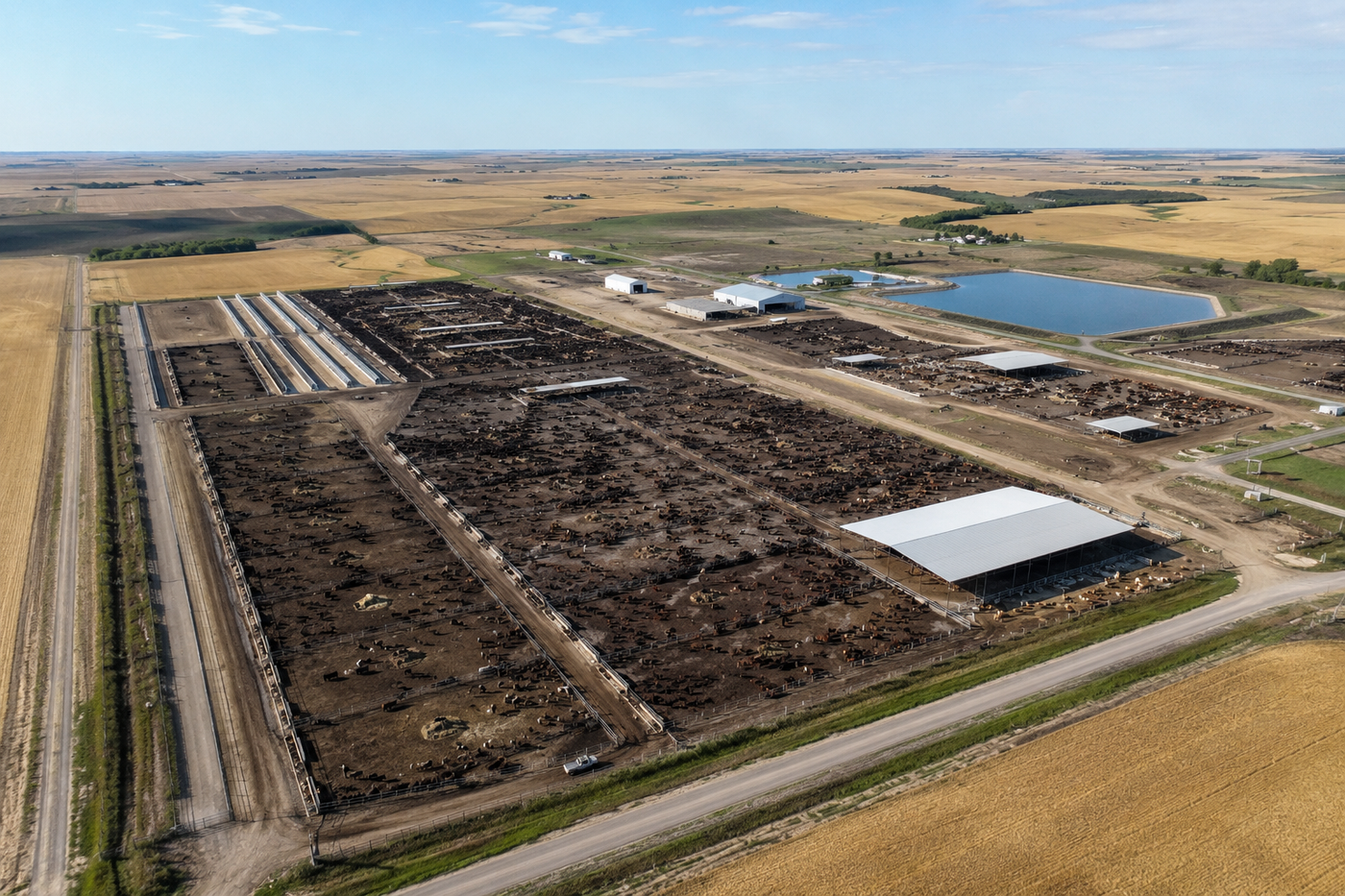
This is the structural force that's been pulling Alberta corn acres up, and 2026 is amplifying it.
TFS Expanse, which runs four feedlots in southern Alberta averaging 30,000 head, has been growing Syngenta's Enogen corn for years for its wet-corn program. Co-owner David Bekkering has been blunt about the goal: produce more corn locally so Alberta feedlots can lean less on U.S. imports. With trade uncertainty between Canada and the U.S., that's not a hypothetical — that's a buffer they actively want.
Then there's a new feedlot near Enchant, which planted 55,000 acres of crop in 2025 and put up silage at the new site. At full capacity (40,000 head), it'll need 500 tonnes of feed grain *daily*. That kind of demand is reshaping local cropping decisions for miles around.
For Alberta corn growers, this means something the U.S. Corn Belt growers don't have in the same way: guaranteed local demand at often better-than-elevator prices. Feedlot alley wants your corn, and increasingly they want it as silage, high-moisture corn (HMC), or snaplage — not just dry grain.
Silage corn vs. barley silage — the conversation that won't quit
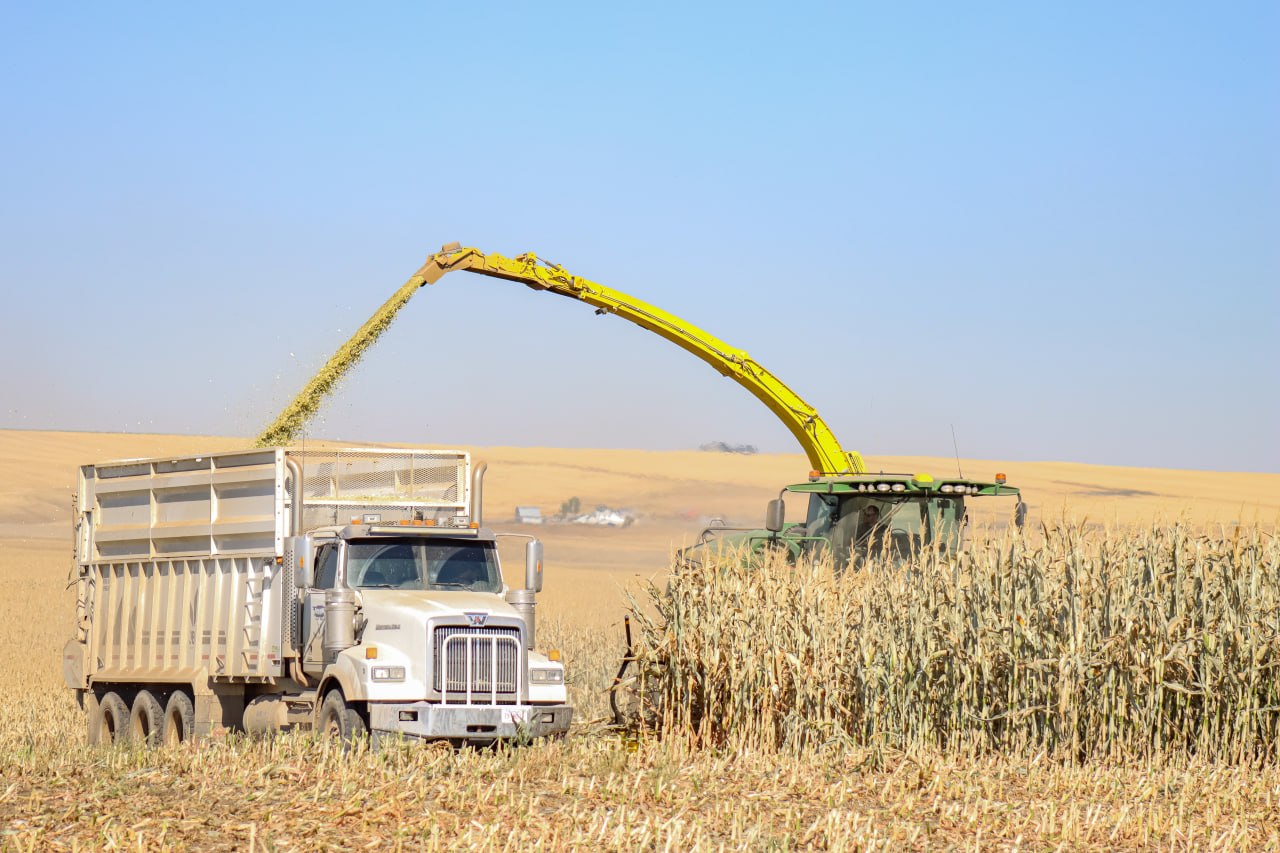
Roughly 50% of Alberta dairy producers have either tried or switched to corn silage. The economics are clear when they work: corn silage yields 18+ tons per acre on irrigation, where barley silage typically tops out much lower. Corn doesn't lodge. The energy density beats barley.
But corn costs about 1.5 times more than barley to grow per acre, and the weather risk is real. That's why a lot of growers are running a hybrid system: corn silage on the irrigated, longer-CHU acres; cereal silage (barley, or barley-pea blends) on dryland or shorter-season ground; and the flexibility to shift acres between them based on how the year is shaping up.
A few things to keep front of mind on silage acres:
- Whole-plant moisture matters: Target 62–68% whole-plant moisture (32–38% dry matter) at chopping. Too wet and you get effluent and clostridial fermentation; too dry and you can't pack out the oxygen. Walk the field and check the milk line — half milk line is generally close.-
- Don't overcrowd: Pushing past about 35,000 plants/acre tends to give you smaller plants and lower milk per ton. Silage rates 1,500–2,000 seeds/acre over grain populations work; beyond that you're hurting yourself.
- Watch nitrates if it stays dry: Drought-stressed corn concentrates nitrates in the lower stalk. If you've had a dry summer going into harvest, raising your cut height by 6–8 inches can drop nitrate levels 30–50%.
- Account for the nutrient removal: A 20-ton silage crop pulls roughly 150–175 lb N, 35–65 lb P, and 160–175 lb K per acre — substantially more P and K than grain corn. Your fertility program has to reflect that you're hauling the whole plant off the field.
Grazing corn in the Peace and central Alberta
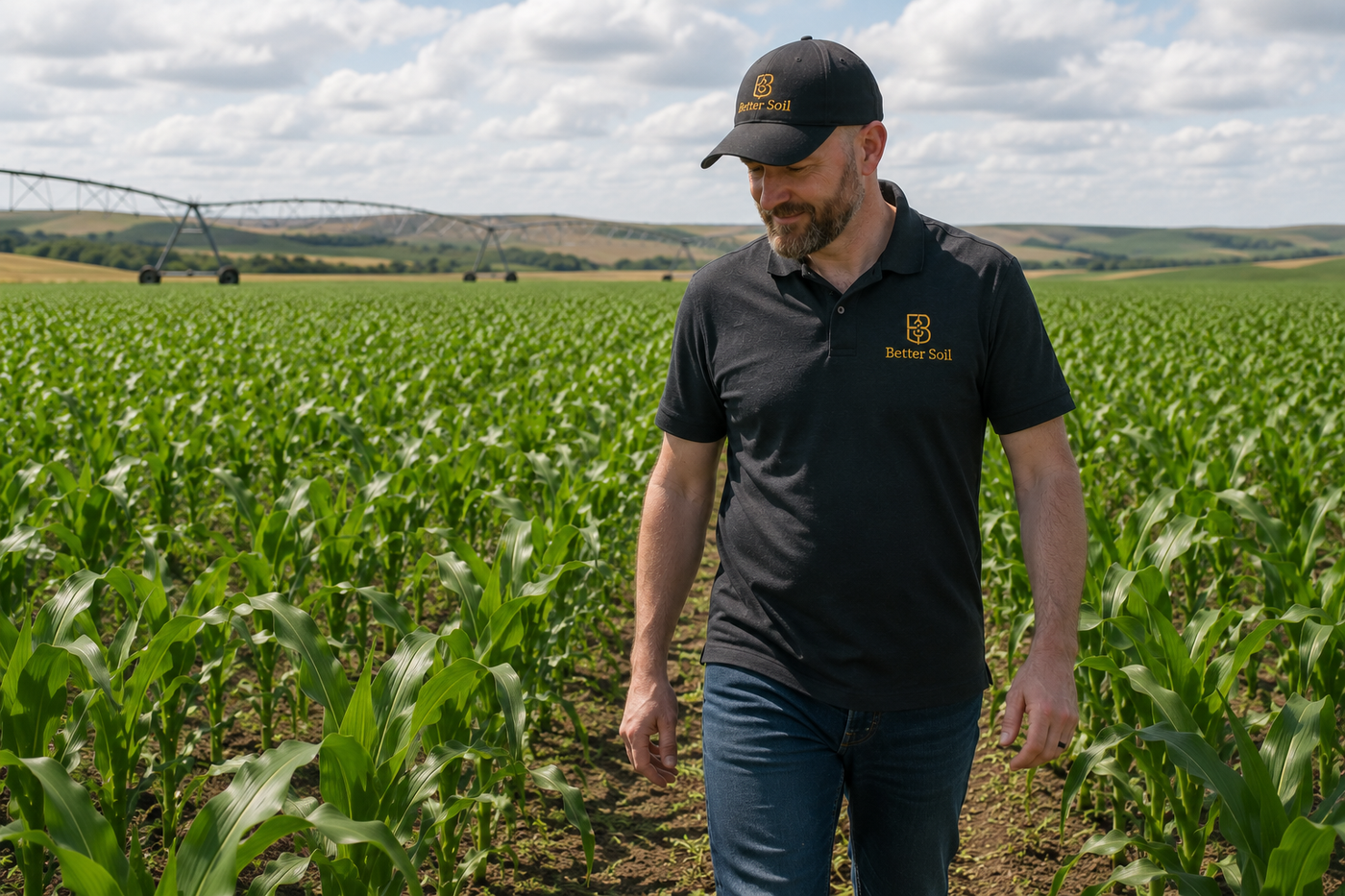
For the cow-calf operators in central and northern Alberta, grazing corn is genuinely changing winter feed economics. Done right, it can dramatically cut labour, feed, and manure-handling costs through the cold months.
The keys are different from silage corn:
- Pick a hybrid rated 400+ CHU above your area to deliberately limit grain accumulation
- Bump your seeding rate 10% over a silage hybrid (and 20–25% over a grain hybrid) to thin out stalks and make them easier on cows
- Use electric fencing to control access and limit trampling waste
- Have a backup plan — an open fall is your biggest risk
Pioneer's P7443R has been a standout in PCBFA trials, producing more than four tons of forage DM per acre. For pregnant cows in mid-pregnancy, the protein content (~7–10% CP) is generally adequate; for late pregnancy or growing animals, you'll want to supplement.
Other prairie corn concerns to watch
- Disease pressure is lower than Ontario or the U.S. Corn Belt — tar spot hasn't been a serious Alberta concern, and the dry climate works against most foliar diseases. But ear rots can still show up in wet years, especially Fusarium/Gibberella, which produces DON and can become a feed-quality issue.
- Corn rootworm is creeping westward and is something to keep an eye on, especially in continuous corn rotations.
- Wildlife pressure — deer and elk pressure on corn fields is a real economic factor in some areas, especially adjacent to crown land.
The bottom line for Alberta
2026 is shaping up better than the last few years for Alberta corn growers, particularly on irrigation. Water is back, hybrid genetics keep improving, feedlot demand is structurally strong, and even with global fertilizer pressure, Alberta is in a more flexible position than most.
The growers who are going to do best are the ones who match the hybrid to the CHU zone they're actually in (not the one they wish they were in), who treat planting timing as a soil temperature decision rather than a calendar decision, and who have a real conversation with their feedlot or dairy buyer about end-use *before* they pick the variety.
If you're trying to decide whether corn fits your operation — or whether your current fertility plan is actually penciling out — Better Soil offers independent, product-neutral soil reviews built around Alberta conditions.
Soil Strategy Call
Ready to make better decisions from your soil test?
Book a free 30-minute Soil Strategy Call and get a
clearer read on what your soil actually needs.