



Soil Insights
Soil Testing
Beyond the Bag: SAP Analysis, Brix Testing & Smarter Foliar Nutrition for Alberta Corn Growers
Soil tests only tell part of the story. Alberta corn growers are increasingly turning to Brix testing, SAP analysis, and precision foliar nutrition to reduce fertilizer waste, improve plant health, and push yields more efficiently.

Table of Contents
- Why the soil test isn't enough
- Brix testing — the cheap entry point
- SAP analysis — where the management leverage lives
- What to test for and when in corn
- What growers running this approach are actually getting
- Foliar delivery — where the new technology comes in
- VantageAg's nano-particle approach
- Putting it all together — a sample in-season program
- Where this fits in the bigger picture
 Why the soil test isn't enough
Table of Contents
- Why the soil test isn't enough
- Brix testing — the cheap entry point
- SAP analysis — where the management leverage lives
- What to test for and when in corn
- What growers running this approach are actually getting
- Foliar delivery — where the new technology comes in
- VantageAg's nano-particle approach
- Putting it all together — a sample in-season program
- Where this fits in the bigger picture
This is a follow-up to my earlier post on what Alberta corn growers are talking about in 2026. In that piece, I hit the highlights — water, CHU, hybrids, fertilizer pressure, feedlot demand. Here, I want to go deeper on the nutrition piece, because that's where most growers leave the most money on the table.
For most of the last 50 years, corn fertility programs in Western Canada have followed a pretty simple logic: do a fall soil test, calculate your N-P-K-S, put most of it down at or before seeding, maybe side dress a portion, and hope for a crop.
That worked when fertilizer was cheap and the gap between average and excellent yields was small. That logic doesn't fit 2026. Inputs cost more, margins are thinner, and the difference between a 200-bushel field and a 250-bushel field on irrigation is increasingly about what's happening to the plant in real time, not what was in the soil last October.
The growers consistently posting top yields aren't the ones putting down the most fertilizer. They're the ones measuring what the plant actually needs, when it actually needs it, and delivering precisely that — usually as a foliar or through fertigation.
Here's how that works, and the tools that are starting to show up on Alberta operations.
Why the soil test isn't enough
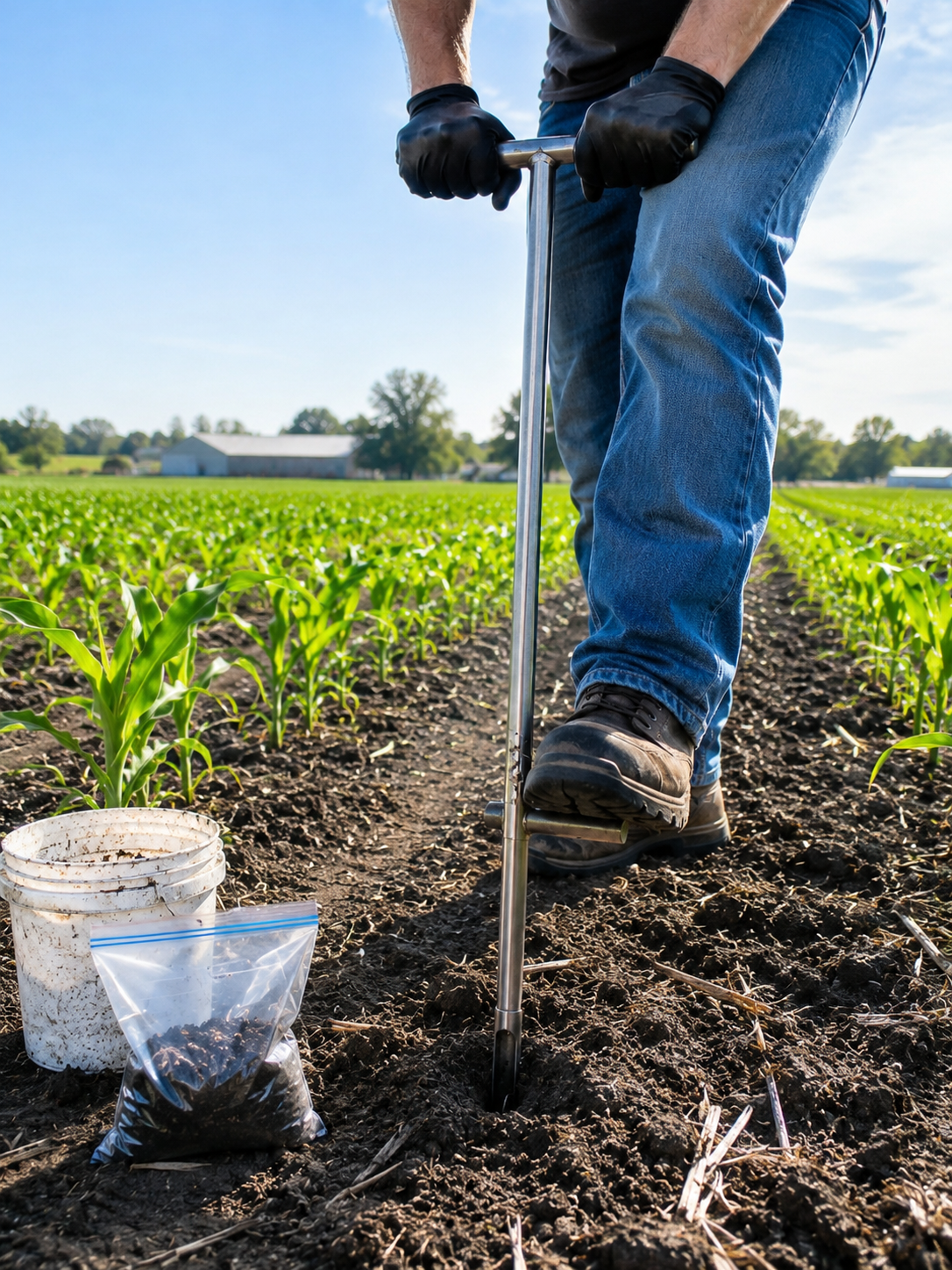
A soil test tells you what's in the soil. It doesn't tell you what the plant is taking up. Those are two different things, and the gap between them can be enormous.
A field can show plenty of phosphorus on a soil test and still be P-limited at the plant level because soil temperatures are too cool, mycorrhizal activity is low, or the soil's biological community isn't cycling nutrients efficiently. Same goes with potassium, sulphur, micronutrients — what the lab sees and what the plant actually metabolizes are often miles apart.
Tissue testing is a step closer to reality, but it has lag. By the time a tissue test comes back showing a deficiency, the plant has often already paid the yield penalty. You're looking at history, not opportunity.
What growers want is a real-time, look-ahead read on what the plant is doing right now. That's where Brix and SAP analysis come in.
Brix testing — the cheap entry point
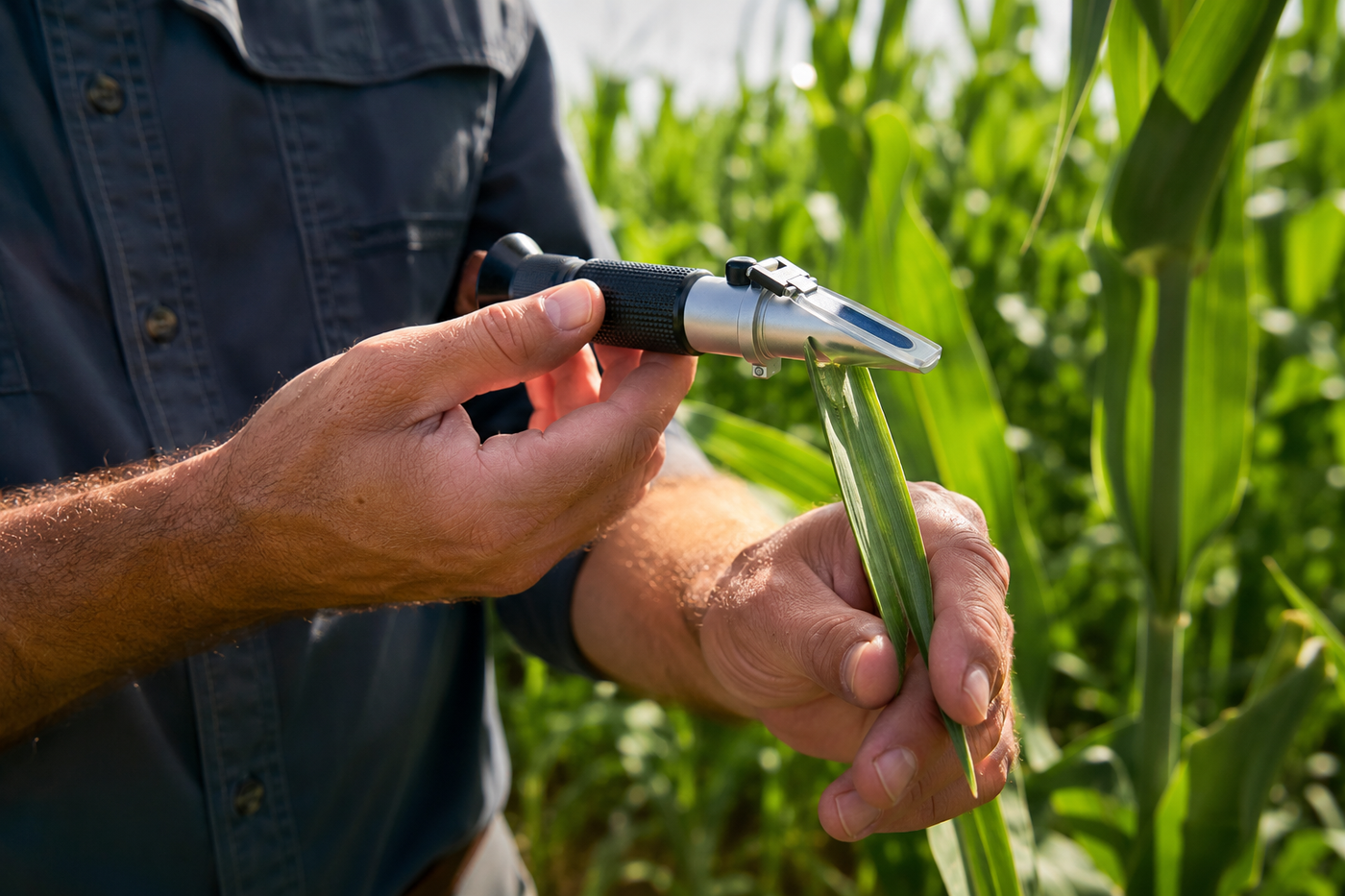
A refractometer is the simplest, cheapest tool in the nutrition toolbox — under $50 for a decent one. You squeeze plant sap onto the lens, hold it up to the light, and read a number. That number is Brix — a measure of dissolved solids in the sap, which is mostly sugars but also includes minerals, amino acids, and other compounds.
The premise — popularized by Carey Reams in the 1970s and pushed forward by folks like Dan Skow, Arden Andersen, and more recently John Kempf — is that Brix correlates to overall plant health and photosynthetic efficiency. Healthy plants making lots of sugars are filling kernels, building cell walls, and producing the secondary metabolites that fend off insects and disease. When Brix gets high enough — generally 12+ in corn leaves at midday — plants become measurably more resistant to insect feeding and many fungal pathogens.
A few things to know before you put a refractometer in your truck:
- Brix fluctuates through the day. It peaks mid-to-late afternoon when the plant has been photosynthesizing all day, and bottoms out before sunrise. Always read at the same time of day on the same field if you're tracking changes.
- Brix drops before storms. Healthy plants pull sugars down into the roots ahead of weather events to recover faster. A sudden drop isn't always a fertility problem — it might just be a weather-anticipating plant.
- Sample consistently. Same leaf position (typically the most recently fully expanded leaf), same pressure on the press, same time of day. Inconsistency makes the readings useless.
- Brix is directional, not diagnostic. It tells you the plant is doing well or that something is off — but not what is off.
Used as a quick gut-check across fields, Brix is genuinely useful. Used as your only nutrition tool, it'll mislead you. That's why most serious growers move to SAP analysis when they want to actually manage from the data.
SAP analysis — where the management leverage lives
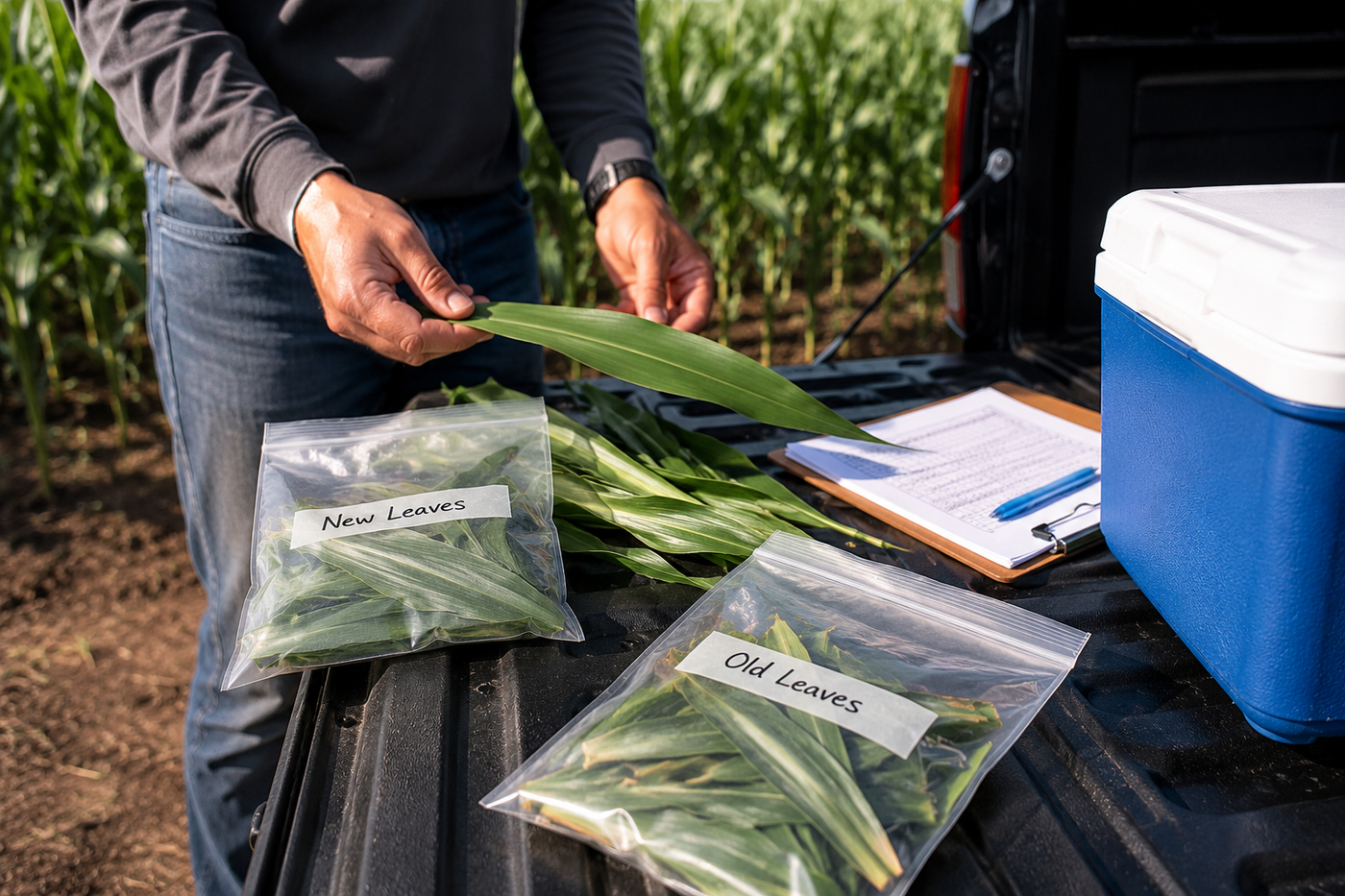
Plant SAP analysis is the diagnostic version of what Brix is telling you qualitatively. You collect leaf samples — typically a set of newer leaves and a set of older leaves from the same plants — and ship them to a lab that extracts the sap and runs a full nutrient panel.
A standard SAP test reports more than 20 parameters: nitrate, ammonium, total nitrogen, phosphorus, potassium, calcium, magnesium, sulphur, sodium, chloride, manganese, boron, copper, iron, zinc, molybdenum, aluminum, silicon, pH, electrical conductivity, and Brix. You get a snapshot of what the plant is actually metabolizing right now — and crucially, by comparing the older leaves to the newer leaves, the lab can tell you whether each nutrient is moving correctly through the plant or getting stuck.
John Kempf's organization, Advancing Eco Agriculture (AEA), has shown that SAP analysis can flag coming nutrient deficiencies 21 to 28 days before they show up on a tissue test, and 35 to 42 days before they're visible in the field. That's a window where you can actually do something useful — apply a foliar correction, adjust your fertigation, and avoid the yield drag entirely.
One caveat worth flagging: SAP analysis is best at tracking mobile nutrients (nitrogen, potassium, magnesium, sulphur). For immobile nutrients like calcium and boron, which don't move through the sap as readily, traditional tissue analysis is still a better tool. Most agronomists running SAP programs use both — SAP for the dynamic, in-season decisions, tissue tests for the broader baseline picture.
What to test for and when in corn
Here's a practical schedule for an Alberta corn crop:
V4–V6 (early vegetative, roughly knee-high)
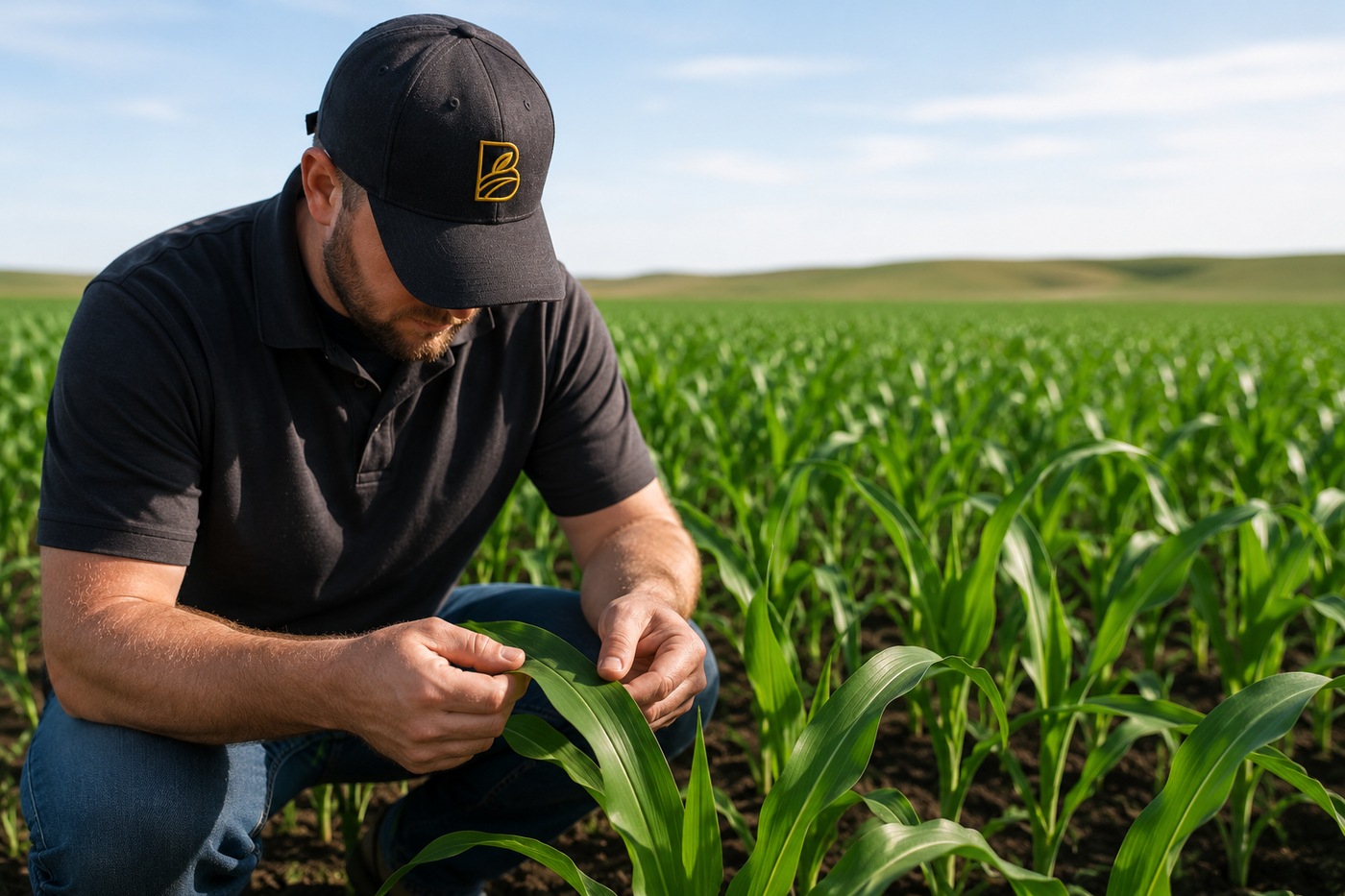
This is your foundation window. The plant is establishing the architecture that determines yield potential.
What to watch for:
- High nitrate readings: this means the plant is taking up N but not converting it to amino acids and proteins efficiently. That's a leading indicator of insect pressure two to three weeks out, because soft, nitrate-rich tissue is essentially aphid food.
- Low sulphur: sulphur is required to convert nitrates into proteins. If S is low, no amount of additional N will fix the problem.
- Low magnesium: Mg is the central atom in chlorophyll; low Mg shows up as poor photosynthetic efficiency before it shows up as visible yellowing.
The classic V4–V6 corrective foliar is a sulphur-magnesium combination, sometimes with a small amount of boron to support N metabolism.
Pre-tassel (V10–V14)
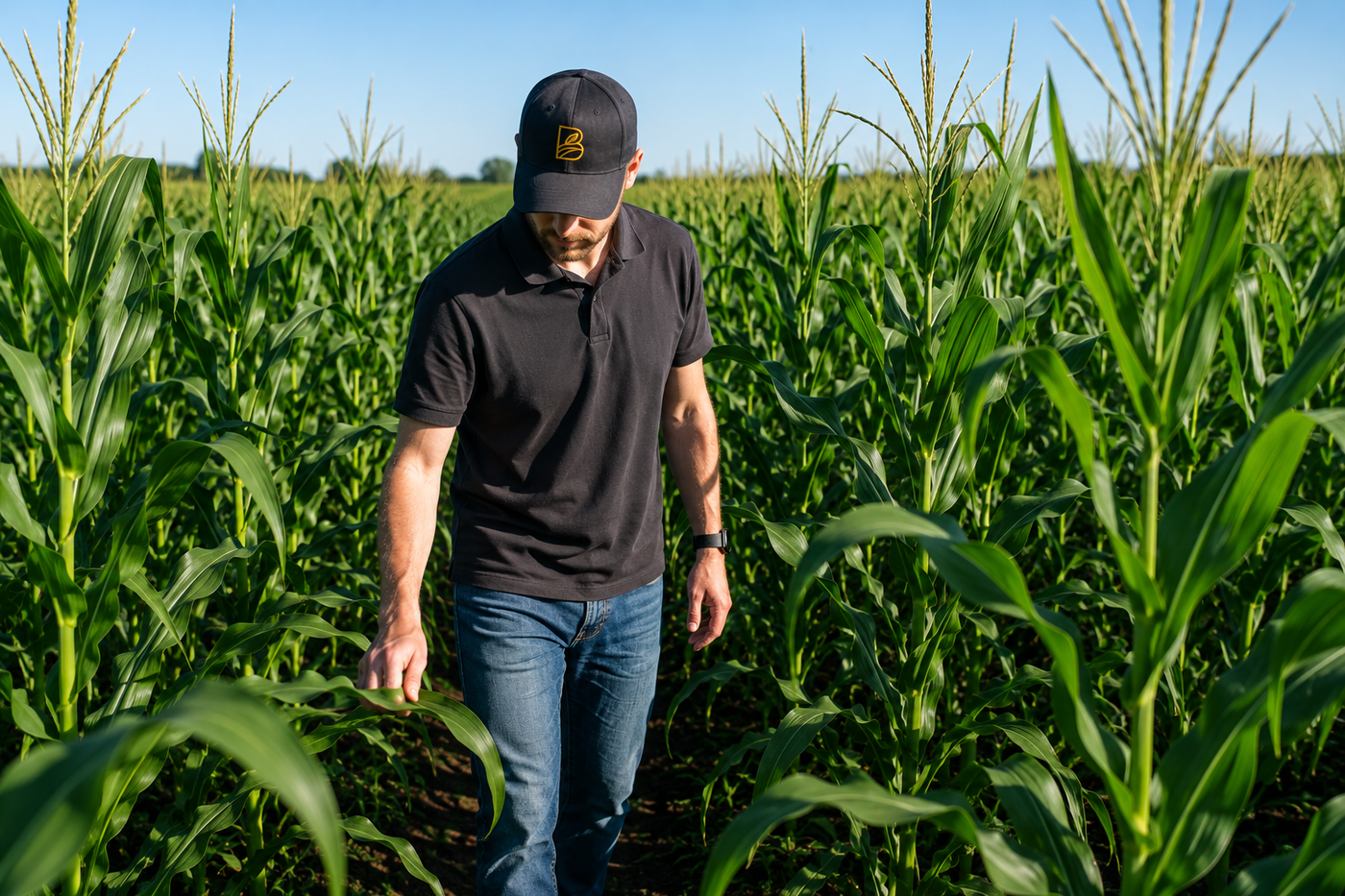
This is the window before the plant pivots into reproductive mode and the energy demand explodes.
What to watch for:
- Phosphorus mobility: P needs to be moving cleanly into developing reproductive tissue. Stuck P shows up as a high differential between old and new leaf SAP readings.
- Potassium status: K drives water relations, stalk strength, and grain fill. Marginal K here often becomes lodging and tip-back later.
- Zinc: corn is one of the most zinc-sensitive crops, and zinc availability drops sharply on cool, wet soils with high P.
R1–R3 (silking through milk)
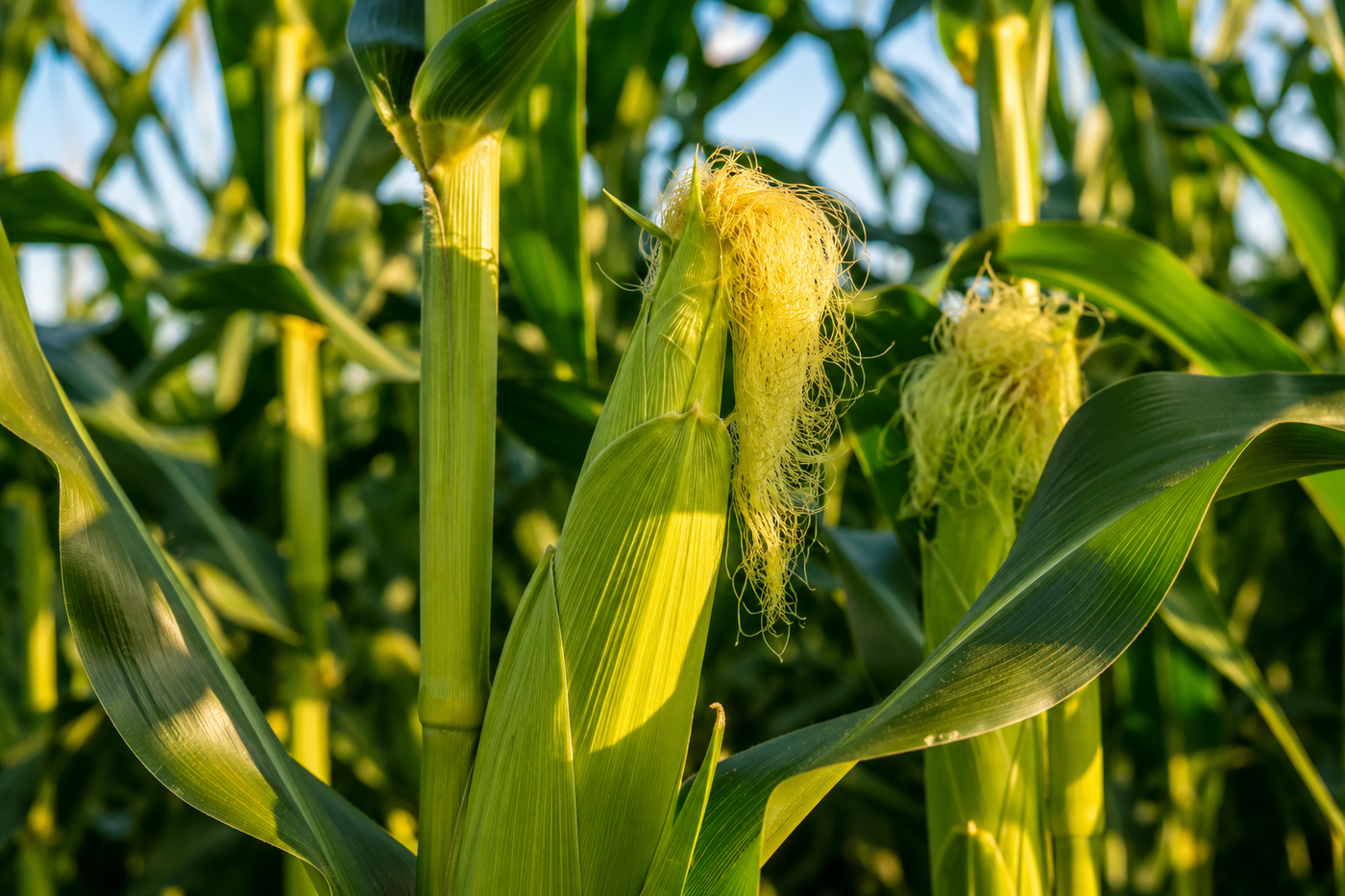
The yield is being made or lost right now.
What to watch for:
- Calcium: Ca builds the cell walls of kernels and is required for proper seed set. Low Ca at this stage shows up as tip-back, poor kernel depth, and weak ear shanks.
- Boron: B is required for pollen viability and pollination. A boron crash at silking can cost you 15–30 bushels and you won't see it until you pull ears.
- Sugar transport: late-season SAP readings give you a picture of whether the plant is efficiently moving photosynthates into the grain. This is where Brix readings really matter.
What growers running this approach are actually getting
The numbers from real operations running SAP-driven programs are pretty consistent:
- Reduced N rates without yield drag. Growers are reporting they can run roughly 0.5 lb of N per bushel of yield instead of the more typical 1.0 lb — because they're not over-applying as a hedge against unknowns.
- Better insect and disease tolerance. When the plant has all the nutrients it needs to convert N to proteins and build proper cell walls, it's measurably less attractive to many pests.
- Higher test weights and grain quality. Particularly relevant for the Alberta feedlot market — wet corn programs and dairy silage rations both reward higher starch content and better digestibility.
It's not magic. It's just precision.
Foliar delivery — where the new technology comes in

Once you know what the plant is short of, you need a way to get it in there. Foliar applications are the natural fit for a few reasons:
- The plant uptakes foliars within hours, not days
- You bypass any soil tie-up issues
- You can target small doses precisely when needed
- On irrigated corn, you're already making in-season passes anyway, so adding nutrition to the tank often costs nothing extra
The challenge with conventional foliars has always been getting the nutrient into the leaf. Plant cuticles are designed to keep stuff out. Most foliar fertilizers rely on surfactants, chelation, and high concentrations to overcome that — which works, but means you're applying significant volume and a lot of carrier.
This is where particle-size technology has changed the conversation.
VantageAg's nano-particle approach
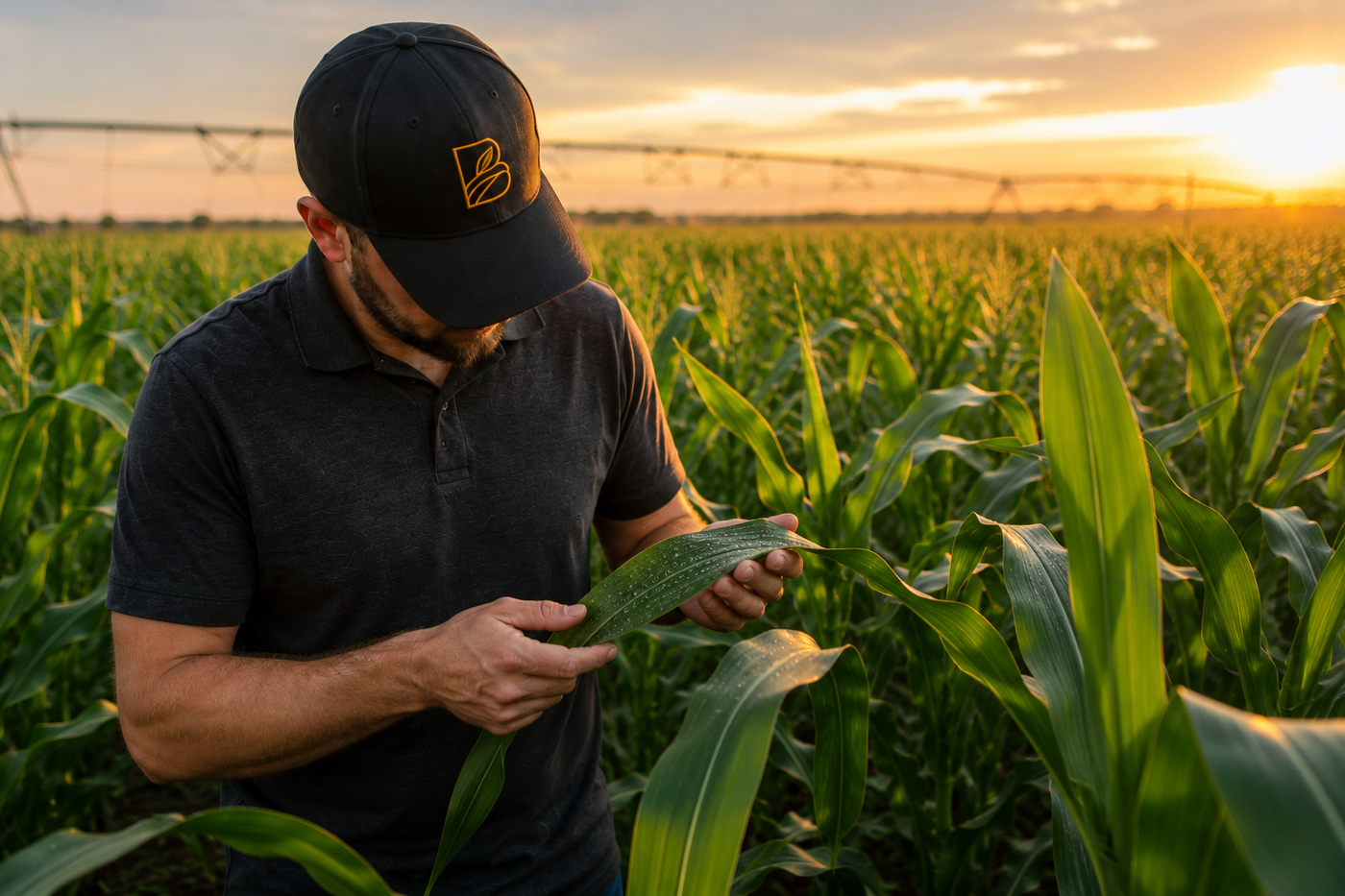
VantageAg, based in Western Canada, has built its product line around dropping nutrient particle size to the sub-nanometer scale — between one-third and two-thirds of a nanometer, which is only 30 to 40 times larger than an atom. At that scale, particles move into plant tissue dramatically more efficiently than conventional foliar nutrients.
The full VantageAg lineup now covers nine nutrients: nitrogen, phosphate, potassium, sulphur, magnesium, manganese, zinc, copper, and iron. Company president Paul Sinkevich has been straightforward about the positioning: their products go on at a fraction of the rate of competitor foliars while delivering 20–30% more of the nutrient into the plant.
For an Alberta corn grower, the practical implications are:
- Lower application rates mean less product to handle, less tank-mix volume, less wear on equipment
- Better tank-mix compatibility — these products tend to play nicely with herbicides and fungicides, so you can piggyback nutrition onto passes you're already making
- Faster uptake — the nano-scale particles are taken up within hours of application, so the plant can use what you delivered almost immediately
- Sustainability story — using less total product to achieve the same nutritional response is a real environmental win, and it's increasingly something downstream buyers are asking about
- The honest caveat: nano-fertilizer field research is still maturing. A 2025 review in npj Sustainable Agriculture looked at 11 studies on foliar nano-fertilizers and found enhanced yield, crop quality, and disease suppression in all but one — but the authors also noted there's still limited long-term field data, particularly around environmental impacts. So treat it the way you'd treat any new tool: try it on a strip, measure it against an untreated check, and let the data tell you whether it's worth scaling up on your operation.
Putting it all together — a sample in-season program
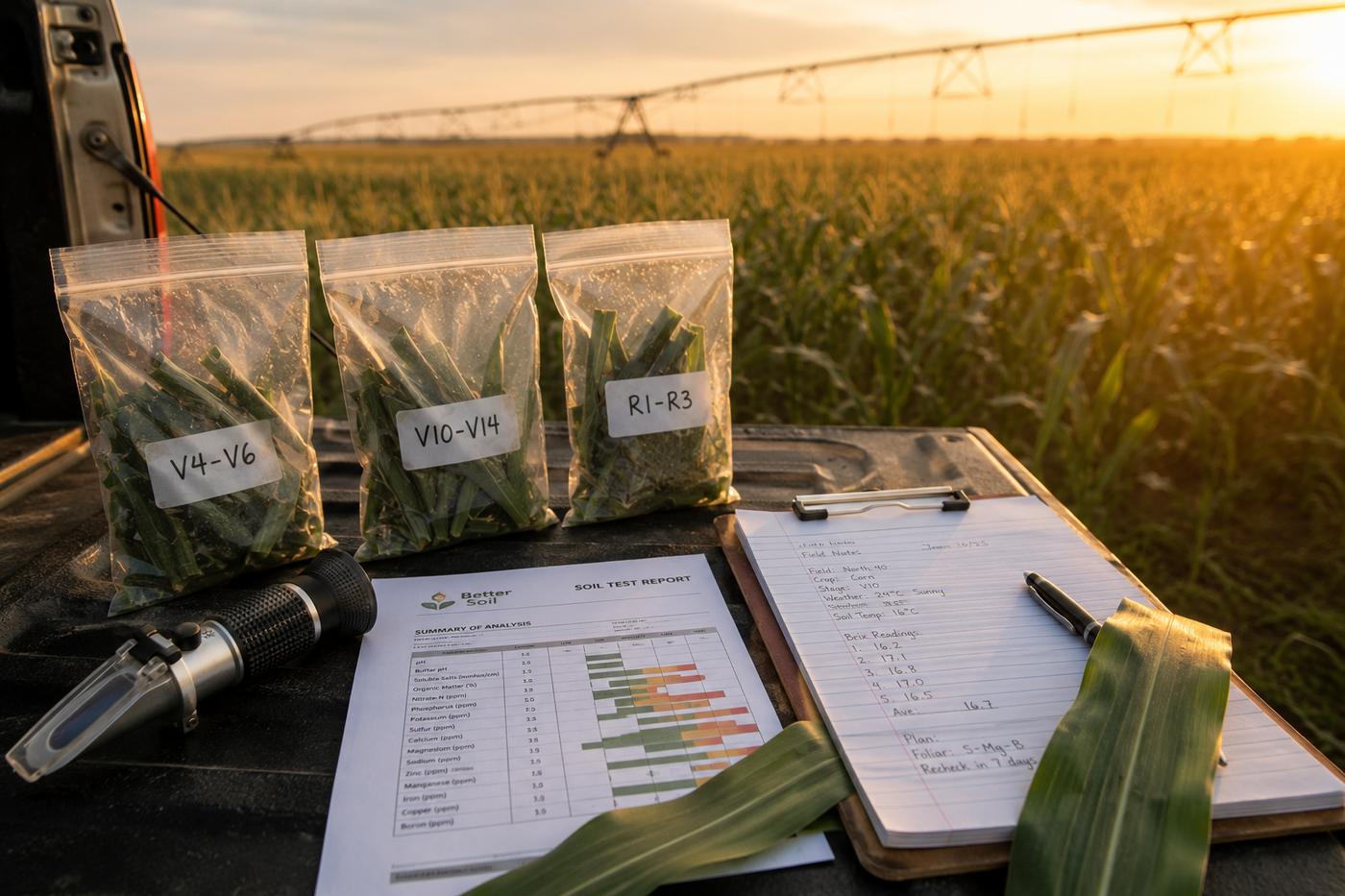
Here's what a complete SAP-driven program might look like on an irrigated Alberta corn field:
Pre-plant
- Soil test as the baseline — you still need this for the macros and to identify any lurking pH or salinity issues - Plan starter fertility based on the soil test, but trim any "insurance" excess
V4–V6
- Pull a SAP sample. Look at nitrate-to-protein conversion, S, Mg, and B
- Apply a corrective foliar based on what the SAP shows — typically a sulphur-magnesium-boron combination if N conversion is off
V8–V10
- Brix check across the field with a refractometer. Identify any zones that are lagging
- Sidedress N if your soil test and SAP data both support it (and don't if they don't)
Pre-tassel (V10–V14)
- Second SAP sample. Look at P mobility, K status, and Zn - Apply a corrective foliar — often a P-K-Zn combination, increasingly delivered through nano-particle products that let you carry the load at low rates
R1–R3 (silking through milk)
- Final SAP if you've got the budget for a third test, focused on Ca and B for seed set
- Foliar Ca/B if needed — this is one of the highest-ROI applications you can make on corn
**Throughout**
- Spot-check Brix when you're walking fields. If a zone reads consistently low compared to its neighbours, that's where to focus attention
You don't have to do all of this in year one. The growers who do this best started with one practice — usually a refractometer in the truck — and added pieces over a few seasons until they had a complete program.
Where this fits in the bigger picture
The reason this approach is gaining traction in Alberta isn't because growers are chasing the latest trend. It's because fertilizer is expensive, margins are tight, and guesswork is becoming harder to justify.
SAP analysis, Brix testing, and targeted foliar nutrition don't replace agronomy fundamentals. They simply give growers a clearer picture of what the crop is actually doing in real time. The result is fewer assumptions, more informed decisions, and a fertility program built around measurement rather than insurance.
The farms that will be strongest five years from now won't necessarily be the ones spending the most on inputs. They'll be the ones that understand their crops better than their neighbours and can respond faster when conditions change.
If you're curious what a SAP-driven nutrition program could look like on your farm, start simple. Put a refractometer in the truck. Pull a few readings. Ask questions. Let the data guide the next step.
And if you'd like a second set of eyes on your fertility program, book a free Soil Strategy Call. Sometimes the biggest opportunity isn't adding another product — it's measuring the right thing.
Soil Strategy Call
Ready to make better decisions from your soil test?
Book a free 30-minute Soil Strategy Call and get a
clearer read on what your soil actually needs.